
Hoover Ranch Outdoors

Species

Population Size

UNKNOWN

Life Span

20 YRS

Top Speed

70 KM/H

Weight

120-240 KG

Height

95-130 CM

Length

160-250 CM

Red Deer

The red deer (Cervus elaphus) is one of the largest deer species. A male red deer is called a stag or hart, and a female is called a hind. The red deer inhabits most of Europe, the Caucasus Mountains region, Anatolia, Iran, and parts of western Asia. It also inhabits the Atlas Mountains in Morocco and Tunisia, being the only species of deer to inhabit Africa. Red deer have been introduced to other areas, including Australia, New Zealand, the United States, Canada, Peru, Uruguay, Chile and Argentina. In many parts of the world, the meat (venison) from red deer is used as a food source.

Red deer are ruminants, characterized by a four-chambered stomach. Genetic evidence indicates that the red deer, as traditionally defined, is a species group, rather than a single species, though exactly how many species the group includes remains disputed. The closely related and slightly larger American elk or wapiti, native to North America and eastern parts of Asia, had been regarded as a subspecies of red deer, but recently it has been established as a distinct species. The ancestor of all red deer, including wapiti, probably originated in central Asia and resembled sika deer.

Although at one time red deer were rare in parts of Europe, they were never close to extinction. Reintroduction and conservation efforts, such as in the United Kingdom and Portugal, have resulted in an increase of red deer populations, while other areas, such as North Africa, have continued to show a population decline.

For payments and reservations, contact us today.
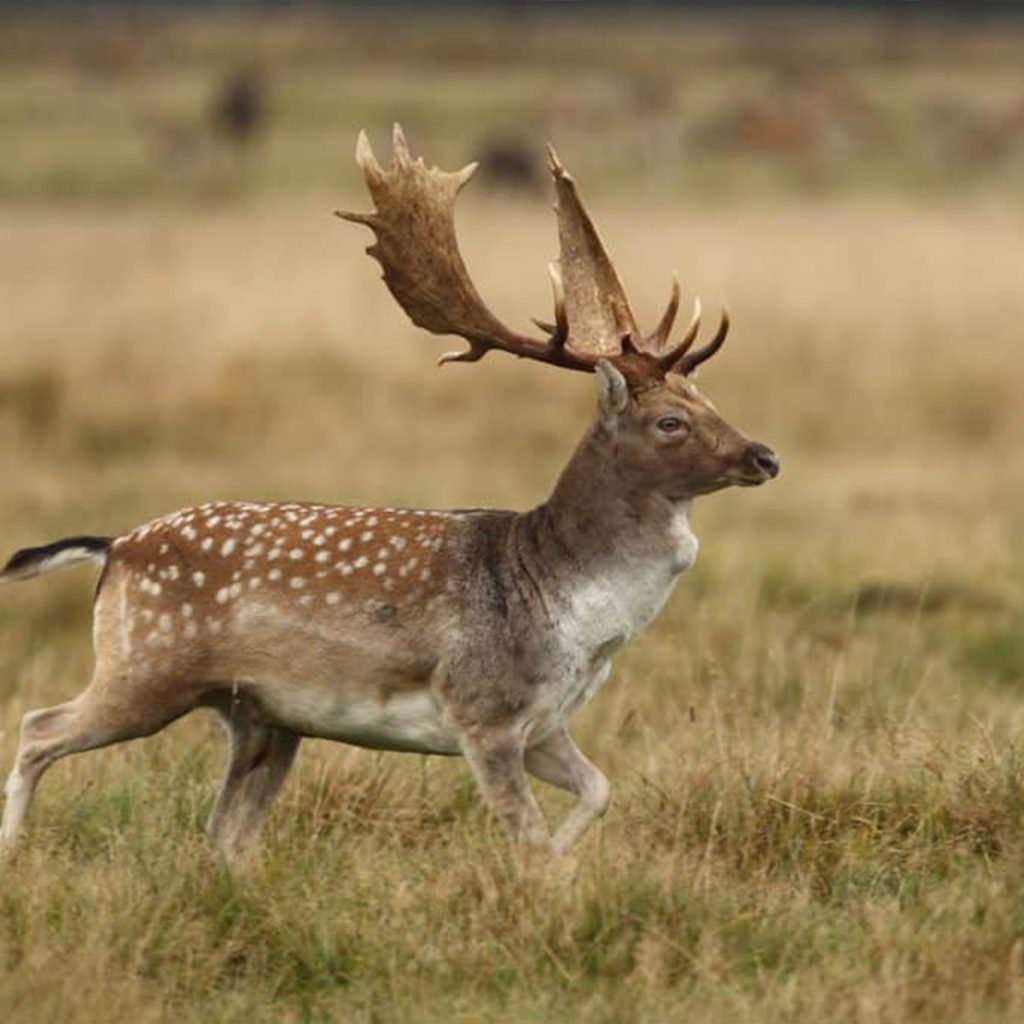
Fallow Deer

The fallow deer is an elegant, medium-sized deer, with a typically spotted coat. Males have broad, palmate antlers. During the autumnal breeding season, known as the ‘rut’, males make a loud belly belch to proclaim their territory and fight over the females. This display may involve groaning and stylized walking, but often results in dangerous, physical contact as they lock antlers. The resulting fawns are born the following summer.
 
Fallow deer prefer deciduous or mixed woodland with large clearings, typically living in small herds. They are also common in many deer parks throughout the country. They eat grasses and herbs, and will browse young, broadleaf trees The fallow deer is variable in color, but is mostly pale gingery-brown, with white spots on the back, a characteristic black and white tail and a white rump patch outlined in black. Some animals are darker brown without any spots, and others are very pale, almost white.
 

For payments and reservations, contact us today.

Population Size

UNKNOWN

Life Span

12-25 YRS

Top Speed

50 KM/H

Weight

30-100 KG

Height

75-95 CM

Length

130-160 CM
Type

Mammals

Diet

Herbivore

Average Life Span

6 to 14 YRS

Group Name

Herd

Size

6 to 7.75 feet

Weight

49-136 KG

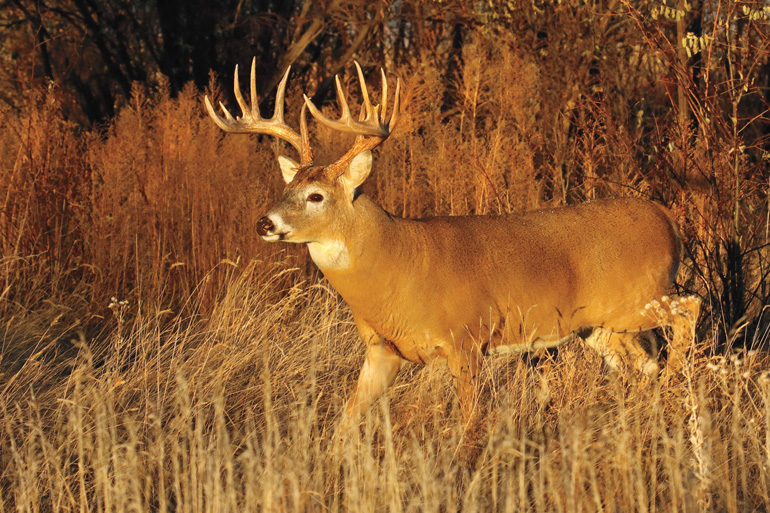
White-Tailed Deer

Scientific Name: Odocoileus Virginianus
White-tailed deer, the smallest members of the North American deer family, are found from southern Canada to South America. In the heat of summer they typically inhabit fields and meadows using clumps of broad-leaved and coniferous forests for shade. During the winter they generally keep to forests, preferring coniferous stands that provide shelter from the harsh elements.
 
Breeding
Adult white-tails have reddish-brown coats in summer which fade to a duller grayish-brown in winter. Male deer, called bucks, are easily recognizable in the summer and fall by their prominent set of antlers, which are grown annually and fall off in the winter. Only the bucks grow antlers, which bear a number of tines, or sharp points. During the mating season, also called the rut, bucks fight over territory by using their antlers in sparring matches.
Female deer, called does, give birth to one to three young at a time, usually in May or June and after a gestation period of seven months. Young deer, called fawns, wear a reddish-brown coat with white spots that helps them blend in with the forest.
 
Diet and Behavior
White-tailed deer are herbivores, leisurely grazing on most available plant foods. Their stomachs allow them to digest a varied diet, including leaves, twigs, fruits and nuts, grass, corn, alfalfa, and even lichens and other fungi. Occasionally venturing out in the daylight hours, white-tailed deer are primarily nocturnal or crepuscular, browsing mainly at dawn and dusk.

For payments and reservations, contact us today.

Axis

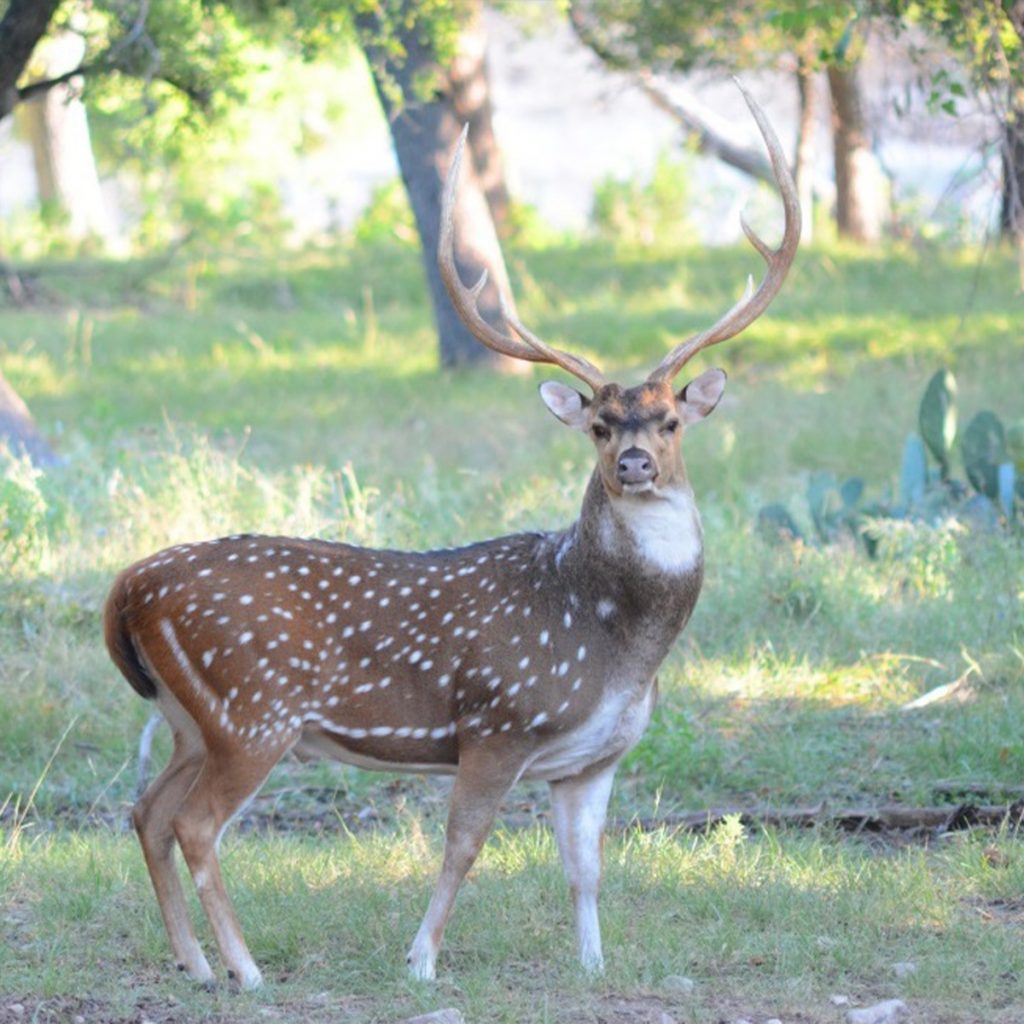
The chital (Axis axis ; ), also known as spotted deer, chital deer, and axis deer, is a deer species native to the Indian subcontinent. It was first described and given a binomial name by German naturalist Johann Christian Polycarp Erxleben in 1777. A moderate-sized deer, male chital reach nearly 90 cm (35 in) and females 70 cm (28 in) at the shoulder. While males weigh 30–75 kg (66–165 lb), the lighter females weigh 25–45 kg (55–99 lb).

It is sexually dimorphic; males are larger than females, and antlers are present only on males. The upper parts are golden to rufous, completely covered in white spots. The abdomen, rump, throat, insides of legs, ears, and tail are all white. The antlers, three-pronged, are nearly 1 m (3 ft 3 in) long

For payments and reservations, contact us today.
Population Size

Unknown

Life Span

9-11 Years

Top Speed

65 KM/H

Weight

25-75 KG

Height

70-90 CM

Length

1.7 M
Average Life Span

10-15 YRS

Height

74-84 CM/29-33 INCH

Top Speed

80 KMH /50 MPH

Size

120 CM/47 IN

Weight

20-57 KG/44-126 LBS

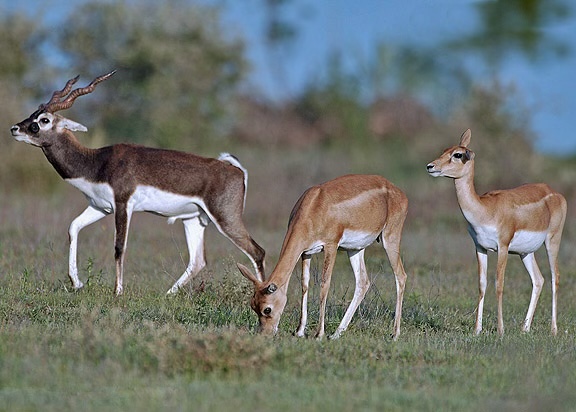
Blackbuck

Scientific Name: Antilope Cervicapra
The blackbuck (Antilope cervicapra) is an antelope that inhabits grassy plains and lightly forested areas with perennial water sources. It is the sole living member of the genus Antilope and was scientifically described by Carl Linnaeus in 1758. The blackbuck is native to and found mainly in India, while it is locally extinct in Pakistan (https://animalia.bio/pakistan-animals) and Bangladesh (https://animalia.bio/bangladesh-animals). Formerly widespread, only small, scattered herds are seen today, largely confined to protected areas. During the 20th century, blackbuck numbers declined sharply but now in India, hunting of the species is prohibited under Schedule I of the Wildlife Protection Act of 1972. The blackbuck has
significance in Hinduism and Indian and Nepali villagers do not harm the antelope.

For payments and reservations, contact us today.

Scroll to Top